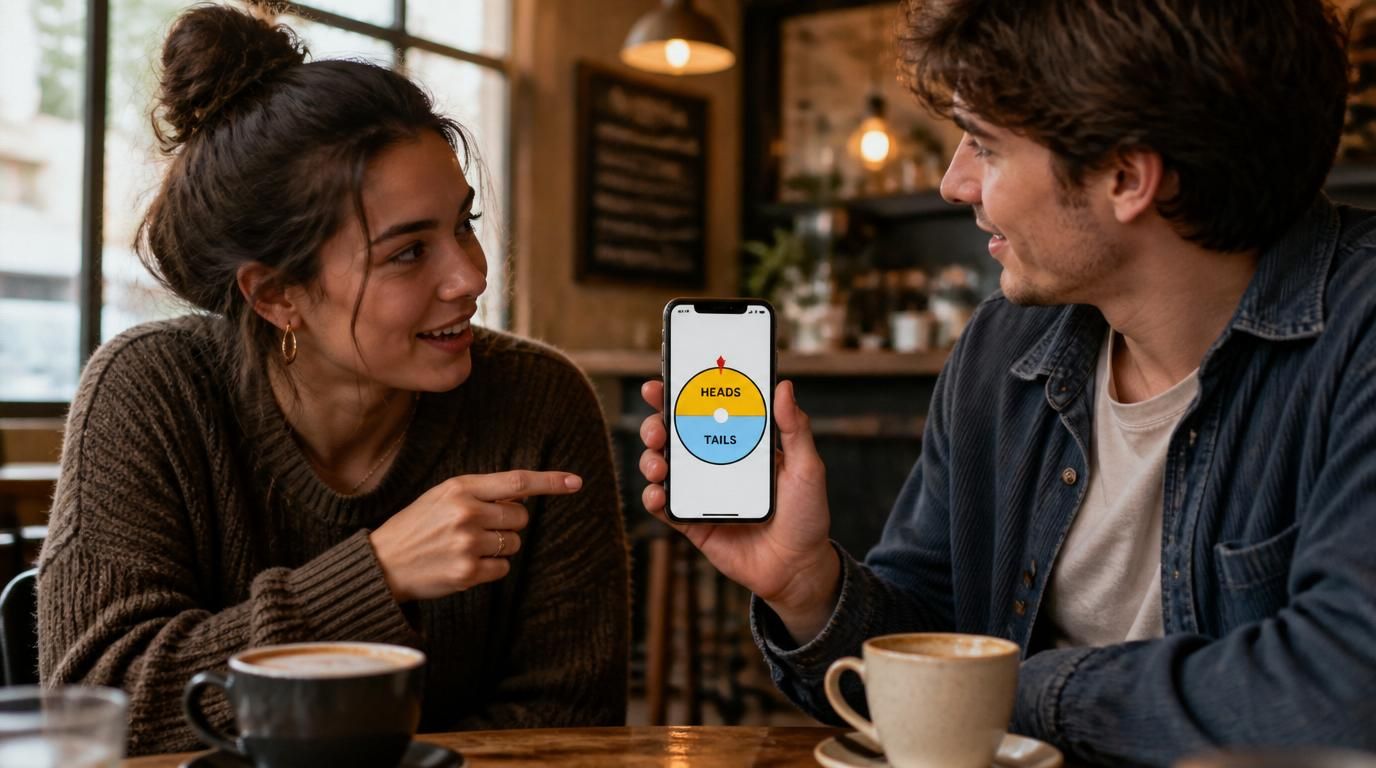
A physical coin is a solved problem for almost every decision worth flipping for. You don't need a digital version for "who pays for the parking meter" or "left or right on the next walk." The reason an online coin flip exists isn't to replace the physical one in those moments. It's for the surprisingly common cases where the physical coin can't reach.
The cases where digital actually wins
Three:
- Remote calls. You're on the phone with a friend deciding which restaurant. Neither of you has a coin in hand, or if you do, the other person can't see it land. The digital coin on a shared screen — or even just one of you flipping and the other watching the result animation — solves the trust problem.
- Contested flips. Two parties who don't entirely trust each other need to flip a coin. A physical coin requires one of them to provide the coin and the flip. A digital coin on a neutral third-party page provides the same flip to both sides simultaneously, with no possible sleight of hand.
- Records. The flip needs to be documented for later reference. A screen recording of a digital flip is reproducible evidence; a physical flip in private is not.
Outside these three contexts, the physical coin is fine. The ritual is part of the moment, and overengineering a casual decision is the kind of thing that makes the people you're flipping with roll their eyes.
The fairness question, briefly
Digital coins are mathematically fairer than physical ones. This isn't controversial — peer-reviewed work (the most cited being a 2007 paper by Persi Diaconis and collaborators) shows physical coin flips have a small bias toward landing on the side they started on, somewhere around 51%. A pseudo-random digital coin has no such bias.
For any decision you're using a coin to settle, that difference is invisible. 50% vs 51% on a single flip is not a margin that matters for who buys coffee. But for repeated flips — sports captain calls across a season, draft order over many drafts — the digital coin is technically the fairer tool, and it's worth knowing.
The "let the loser call it" rule
The single best tweak to any coin flip — physical or digital — is letting the party who didn't initiate the flip call the side. If you propose the flip, the other person calls heads or tails. This removes the worry that you've practiced flipping a coin in a specific way (real or imagined) to favor one side.
For digital flips, it's the same: the person who clicks the button doesn't pick the side. Whoever didn't click picks. The result is now demonstrably independent of either party's input.
The "best of three" trap
People sometimes ask for "best of three" coin flips, especially in contested settings. This sounds fairer but isn't — it's the same coin doing the same thing more times, which doesn't improve the per-flip fairness; it just averages over noise the per-flip result already handled.
The real reason best-of-three gets proposed is psychological: both parties feel like they had a chance. If that matters more than speed, fine — do it. But it isn't more random, and treating it as such confuses what the flip is supposed to do.
Sports captain calls
Don't introduce a digital coin into a context where the protocol calls for a physical one. Most organized sports leagues have a procedure — referee provides the coin, visiting captain calls in the air, the result is the result. Replacing the league's coin with your phone is not an improvement; it's a procedural violation that nobody asked for.
For casual pickup games where no protocol exists, the digital coin is fine. Both captains see the same result on the screen at the same time. No coin to provide, no flip to trust.
The recordable flip
The use case that's quietly become the most common reason to use a digital coin: needing to prove later that a flip happened. Online disputes, content collaborations splitting credits, anything where the flip's result might be questioned a week later. A 10-second screen recording of the digital flip — visible button click, visible animation, visible result — is a record that resolves every "wait, what did it land on" conversation in advance.
Physical coin flips in private can't do this. Even on video, a physical flip can be argued (camera angles, who controlled the toss). A digital flip recorded on screen has no such ambiguity.
Where physical still wins
In-person, casual, momentary decisions: physical coin every time. The flip is a part of the social fabric of the moment — the toss, the catch, the slap onto the back of the hand. Replacing that with a phone screen makes a small decision feel formal in a way it didn't need to feel.
The right rule is contextual: digital when you need it (remote, contested, recordable), physical when you don't. A virtual coin flip is a tool for the specific cases the physical version can't handle, not a universal replacement for it.
