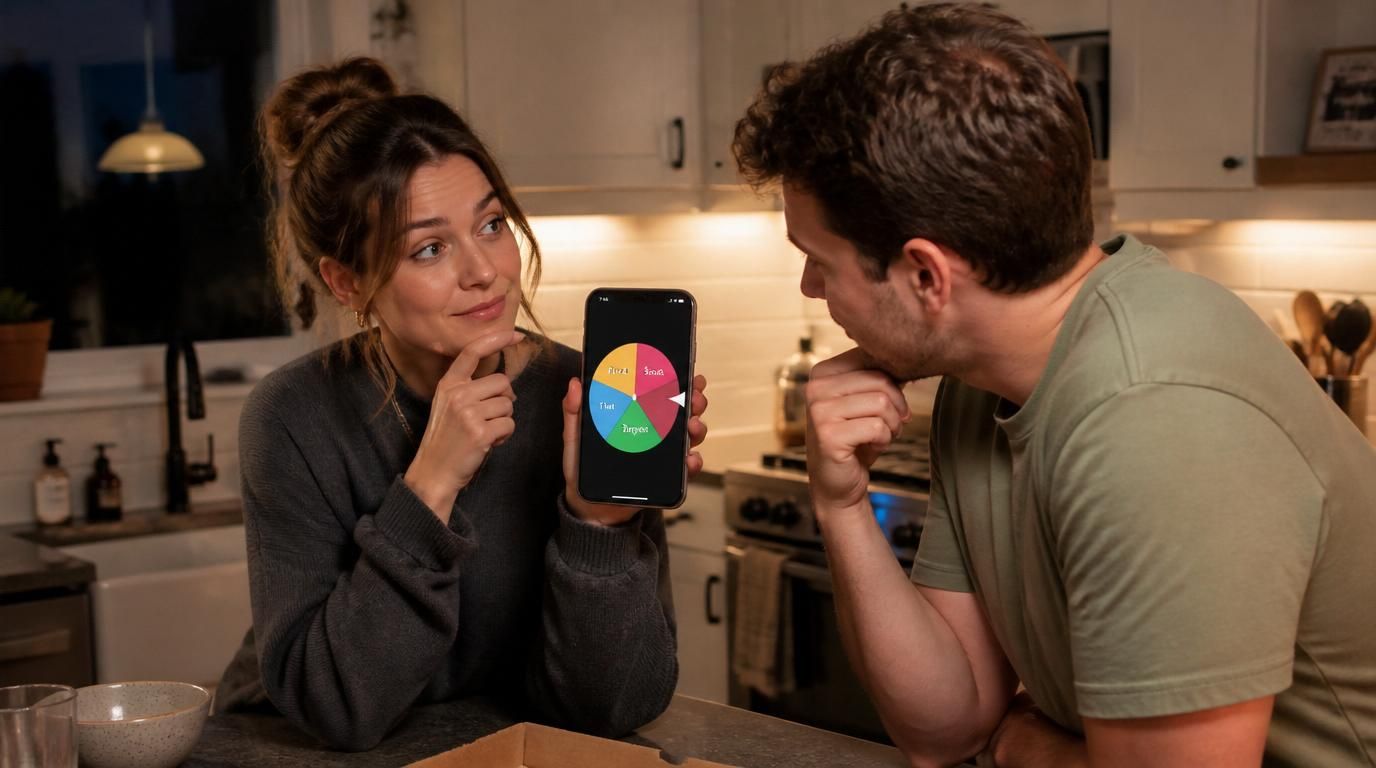
Most evenings, the food decision isn't between sixty restaurants. It's between four or five things you might actually eat tonight, and the reason it takes 35 minutes to settle is decision fatigue, not lack of options. A food wheel works as a kitchen-table tool not because it expands your choices, but because it ends them.
The trick is treating it as a tiebreaker among a curated short list, not a generator of unlimited possibilities. Here's how to actually use one.
Curate the list first, spin second
The single biggest mistake we see: people open a food wheel, find a 200-option template ("Tacos, Sushi, Indian, Thai, Italian…"), spin, get "Ethiopian," and realize the nearest Ethiopian restaurant is 40 minutes away. The wheel just wasted three minutes confirming that not all options are real options on a Tuesday night.
Better workflow: build your own list of 8 to 12 things that are realistic on a typical weeknight. Pasta. Stir-fry. The Thai place that delivers. The frozen pizza in the freezer. Eggs and toast. Whatever the actual rotation already is. The wheel's job is to pick among them when you can't decide.
This list also evolves naturally. Anything you wouldn't be happy spinning into is the thing to remove. Anything you've been craving but keep forgetting goes on.
Two wheels, not one
The single most useful upgrade is splitting the wheel by effort level. One wheel for cooking-tonight options. One for ordering-tonight options. Decide which mode you're in first — usually based on energy, time, and whether the dishes from yesterday are done — and only then open the relevant wheel.
Mixing the two on one wheel means every spin is also a referendum on whether you're cooking. That's two decisions for the price of one, and the second one (the cooking question) needs human input, not a spinner.
The best-of-three rule
The wheel will sometimes pick something you immediately don't want. This is normal and doesn't mean the wheel is broken — it means your gut had a preference you hadn't surfaced yet.
Best-of-three is the standard rescue: spin once, note the result, spin twice more without putting anything back, and pick whichever of the three you actually want. You've done two things at once — surfaced the preference (the rejection of spin one revealed it) and used the spinner to narrow the field.
This works because the alternative — single-spin tyranny — turns the wheel into a tool you'll stop using after the first bad result. Best-of-three keeps it sustainable.
The couples version
The hardest version of "what to eat tonight" is two people who both say "I don't mind, you pick." A food wheel breaks this loop better than almost any other tool because it removes the picking from both people.
Workflow that works: each person nominates four options to add to the wheel. Total eight. Both people commit, before the spin, to accepting the result. The negotiation now happens at the nomination step — "I don't want sushi tonight, take that off" — instead of after the spin, where it would feel like overriding the universe.
Because each person controls half the wheel, both feel agency. Because the spin is genuinely random, neither person can be blamed for the result. The conversation ends faster, and — in our own kitchen at least — both people are usually happier with the result than they would have been with whatever they would've eventually settled on.
What about kids
The wheel works surprisingly well with kids old enough to read the options, and surprisingly poorly with younger ones. The reason: older kids accept the spin as a rule of the game. Younger kids treat it as a suggestion they can renegotiate, which defeats the whole point.
If you have a mixed-age table, run the wheel with adults and let kids choose between two pre-approved options for themselves. The "the wheel decides" frame stays intact, and you avoid a five-year-old discovering that they can in fact get pasta every night.
The trap to avoid: spinning when you're hungry
Decision fatigue compounds. The hungrier you are, the less able you are to commit to the wheel's result, and the more tempted you are to spin "just one more time." Two more spins later, you've spent fifteen minutes on the wheel and you're now angry-hungry.
The fix is to spin before you're starving — usually right when the "what's for dinner" question first comes up. If you're already at the point where deciding feels impossible, switch to ordering whatever you ordered last week. The wheel is for normal-tired-after-work decisions, not for crisis-hungry decisions.
Why this isn't actually lazy
Using a tool to make a decision sounds lazy until you notice how much real time the un-decided alternative consumes. The 35-minute "what do you want / I don't know, what do you want" loop happens because both people are conserving relationship energy by not committing. The wheel commits for them. The energy goes back into the rest of the evening instead of into dinner triage.
Try it for a week with an 8-option curated list. If after seven days the list looks the same as on day one, you've found your actual rotation — and you've also probably noticed that dinner is happening 25 minutes earlier than it used to.
Build your list once in the food picker wheel, save it, and stop relitigating the dinner question every night.
